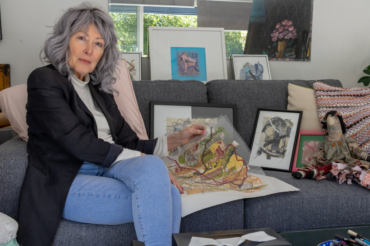
NO ONE WAS MORE SURPRISED THAN CAROLINE KEENAN WHEN SHE FOUND HERSELF SLOTTING HAPPILY INTO COUNTRY LIFE IN VICTORIA’S NORTH-EAST.
Having grown up on a sheep and cropping farm at Yarrawonga on the Victorian side of the Murray River and graduating high school as a boarder in Ballarat, Caroline Keenan says you couldn’t see her heels for dust as she hightailed it to the big smoke and Melbourne’s Monash University.
“If anyone suggested I’d have ended up living in the country, I’d have laughed in their faces,” Caroline says. “But my career as a journalist landed me in several regional roles, as well as a decade working for the ABC.”
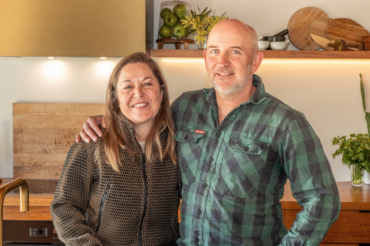
Along the way, she interviewed her husband-to-be Dave McKellar, who has many years experience as an equine vet in the racing industry.
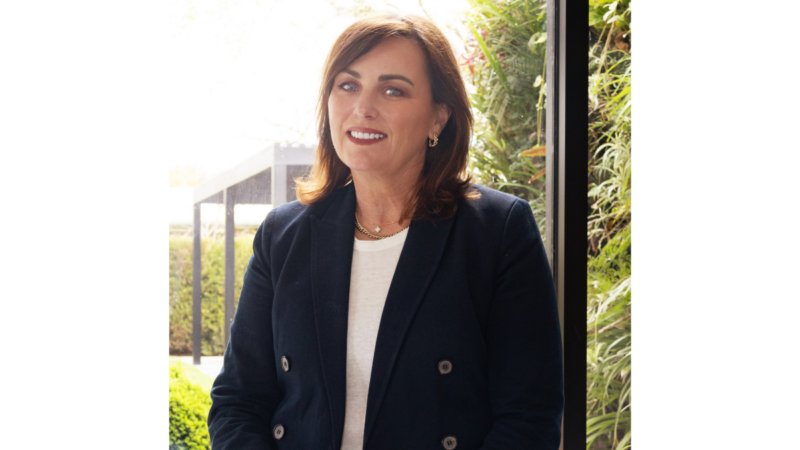
“He was from Euroa originally and actually went to school with my brother, though we didn’t know each other super well,” Caroline says. “Dave invited me for dinner and the rest is history.”
As Caroline continued working for the ABC, she and Dave welcomed three daughters, Georgina, who is now 20 and studying arts at uni, Martha, 17, and Grace, 15, who are both in high school. “All my pregnancies were on camera, with the head shots getting tighter to avoid the bump,” Caroline recalls. “Dave had a long association with the [horse training] Hayes family and he always wanted to return to the country. So when an opportunity came up in 2011 for him to work at Lindsay Park training facility at Euroa, it was inevitable that we would move up there to live.”
Caroline says she’s not going to pretend the transition was an easy one. “At first, I used to come up just for the weekends,” she says. “Even though it was only a two-hour trip, it was tough with a car full of babies, and I remember arriving in town one Saturday afternoon having forgotten that the supermarket closed at midday and thinking, ‘Oh, my god, you could shoot a cannon up the main street and not hit a soul.’ Finding full-time work was also tricky as there are fewer opportunities and it’s not as well paid as most metropolitan jobs.”
Gradually, however, she found her feet, making friends through the girls’ school network. “Like-minded people find each other,” Caroline observes. “They introduced me to their friends and now I have a broad friendship group from a much wider age group, because people in the country tend to have children younger and continue in their communities for longer.”
These days, Caroline is well settled in a comms role for a government environment organisation and finds her spare time filled with volunteer work for any number of community organisations. “We were quickly nabbed for committees,” she says. “I’ve been involved with the hospital board and Dave, the football club. It’s an easy way to become embedded in the community.”
Caroline has also taken up tennis and cheerfully admits she’s in awe of the women and men in their 70s and 80s who beat her on a regular basis. “I didn’t pick up a racquet until I was 40, but it’s become a real passion,” she says. “Dave calls me Steffi Graf, who I definitely am not, though I should be from the amount of time I spend practising and having lessons. It’s been another great way to connect with the community.”
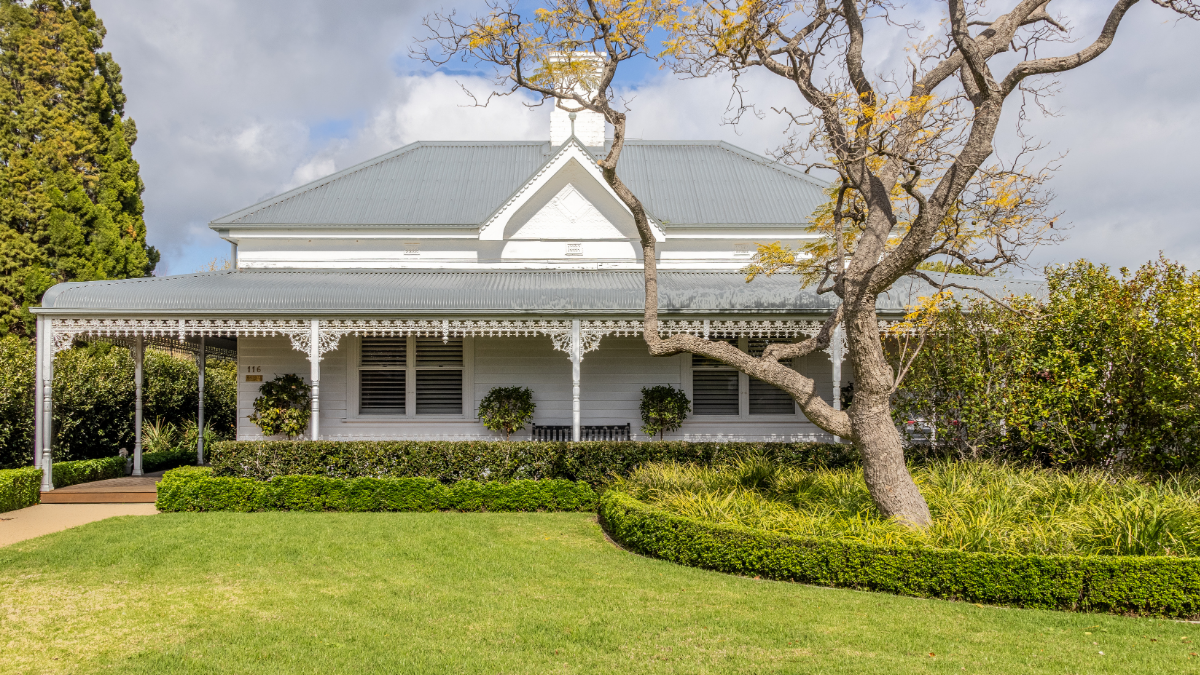
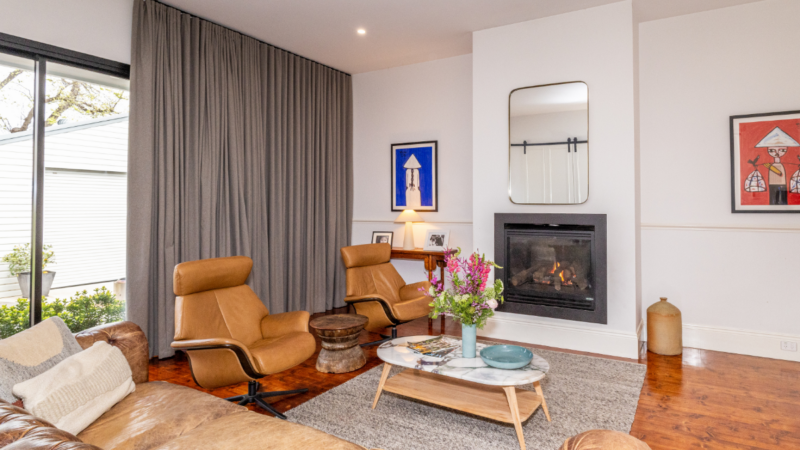
In 2015, Caroline and Dave bought an 1890s house called Wayville close to the centre of town and, two years later, with the help of local architect Edwina Thompson, began restoring it. “It was built as the council secretary’s house,” Caroline says. “Although it was in disrepair, I used to drive by and think, ‘Wish I could get my hands on that.’ When eventually we did, it turned out that this beautiful old lady had great bones, with big wide verandahs to keep her — and us — cool. The rooms had been updated through the years and needed rearranging and opening up, but fortunately the floorboards and pressed-metal ceilings were in good condition.”
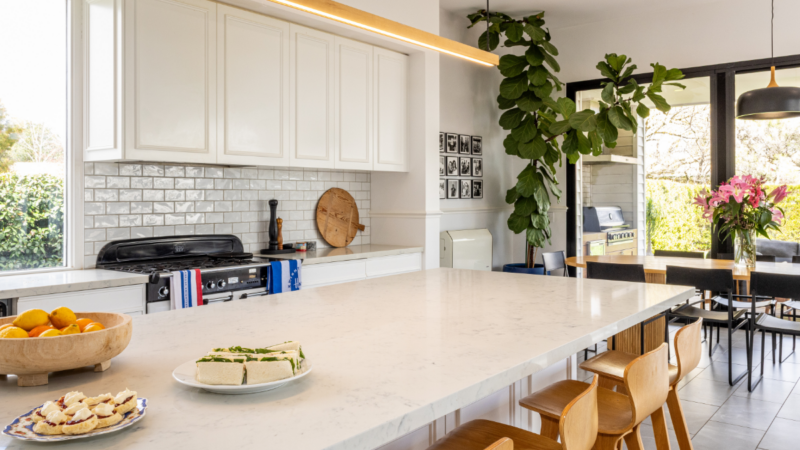
Caroline scoured demolition places to source the front door and leadlight panels, plus fireplaces and mantelpieces to restore the fires in most rooms. “When we replaced the lathe and plaster walls, the newspaper linings allowed us to date the house,” she says. “In 2018, we finally moved in and it now feels very settled. Euroa grew a lot during COVID with young families moving to the country and, although we paid $350,000 for the house because it was in such disrepair, it’s now worth a lot more. Of course, we’ve spent a lot on it as well.”
While Caroline says their daughters are very city-oriented, she’s surprised at how deep her roots now are in Euroa. “It’s the friendships I would miss most of all,” she says. “For someone who never imagined returning to country life, in hindsight, it was 100 per cent the right thing to do from a family and business perspective.” AC