Serves 4-6 by Lucy Tweed
Cooking time 2¾ – 3¼ hours
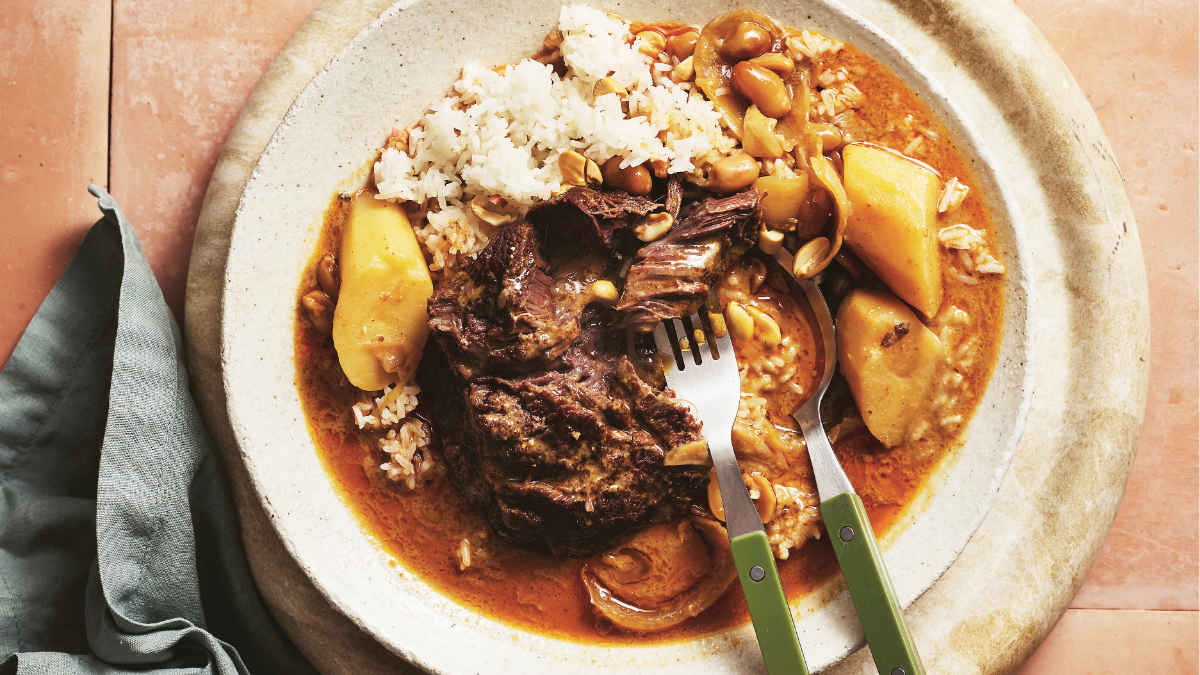
Using beef cheek here makes perfect sense. It’s a cut full of connective tissue and glorious, globby gelatine, which melts into the curry over hours, giving you the kind of texture that barely holds together on the fork. It’s robust, sweet, rich, softly spiced — not hot — and always deeply comforting. A meal for the weekend, with its own rhythm and reward.
670ml canned coconut milk, solid cream separated from the milk
4 tablespoons good-quality massaman curry paste
About 4 beef cheeks, trimmed and left whole (cheeks are about 200g each)
375ml (1½ cups) beef stock
2 tablespoons fish sauce
1 tablespoon tamarind concentrate
2 tablespoons palm sugar or brown sugar
4 cardamom pods, lightly crushed
1 cinnamon stick
2 star anise
6 medium kipfler potatoes, peeled and cut into 4cm pieces
1 brown onion, quartered
100g roasted peanuts
Salt
TO SERVE
Steamed jasmine rice
Fresh coriander leaves
METHOD
Heat a wide, heavy-based casserole over medium–high heat and add the separated coconut cream. Cook, stirring, until it has split (it will look oily and slightly broken, with little pools of clear coconut oil appearing). Add the curry paste and fry gently over medium heat for 2–3 minutes until aromatic. (See Hints for why this step is important.)
Nestle the beef cheeks into the pan, turning to coat them in the curry paste. Pour in the coconut milk and beef stock, then add the fish sauce, tamarind and palm sugar and stir them through. Drop in the cardamom pods, cinnamon stick and star anise. Bring just to a simmer, then cover and cook very gently over low heat for 2½ –3 hours, turning the beef occasionally.
Add the potato, onion quarters and half of the peanuts for the last 40–45 minutes of cooking. Taste and season with salt if needed.
Serve the beef cheeks whole or thickly shredded with plenty of the rich sauce, steamed jasmine rice, fresh coriander leaves and the remaining toasted peanuts, roughly chopped. Refrigerate in an airtight container for up to 3 days, or freeze for up to 3 months.
HINTS
• Frying the curry paste in coconut cream that has split allows the paste to develop that complex richness that a good massaman needs. Good-quality, full-fat coconut cream is critical — some supermarket cans (especially ‘‘light’’ ones) have stabilisers that stop it splitting properly.
• Leaving the beef cheeks whole gives a more impressive appearance to the dish.
• Use a pot with a tight-fitting lid to prevent too much liquid loss during the long braise.