EXPECT TO ENCOUNTER BUFFALOS AND BULLDUST ON THE CENTRAL ARNHEM ROAD FROM KATHERINE TO THE REMOTE OUTPOST OF NHULUNBUY, IN THE NORTH-EAST OF THE NORTHERN TERRITORY.
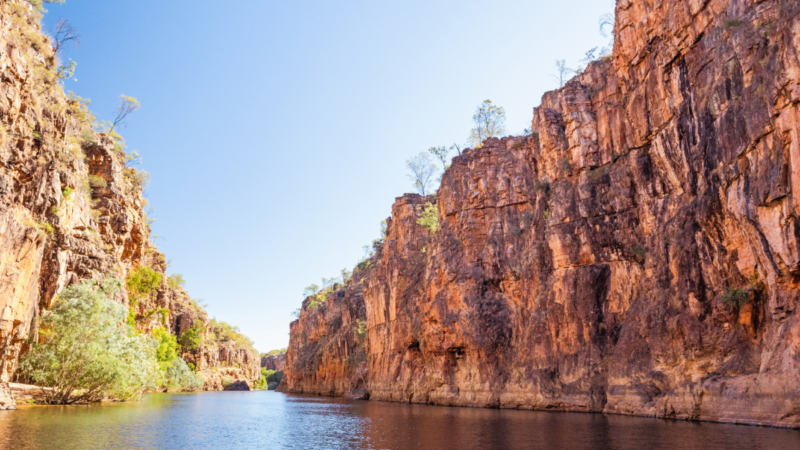
Landon McElhone points to some debris caught in a crevasse high in the cliff face in the first of the 13 gorges that the Katherine River runs through in Nitmiluk National Park. The young Wardaman man from the south-west of Katherine in the Northern Territory’s Top End shares a wealth of knowledge about the region and its natural and social history in his role as a tour guide at Nitmiluk Gorge.
He explains that the park’s name comes from the word “nitmi”, which means the sound of cicadas in the language of the Jawoyn people, the traditional owners of the land that’s traversed by the spectacular gorges, management of which was finally returned to its rightful owners in 1989, following an 11-year land rights claim.
“The Katherine River has an average depth of seven metres,” he says. “But during The Wet, we can get up to 1000 millimetres of rain and the river becomes a torrent that can double to a depth of 14m. That’s how broken branches and other debris come to end up so high in the cliffs.”
Landon goes on to explain that when it floods, the river becomes a “croc highway” with saltwater crocodiles being swept down from high on the Arnhem escarpment, where they compete with the more docile freshwater crocs that lay their eggs in the sandy stretches lining the riverbank. “Rangers clear the river of salties before the tourist season starts and constantly monitor for them. Only one to two per cent of croc eggs make it to adulthood,” he says, pointing to a sign warning visitors not to walk on these nesting grounds. “But salties are not the only predators — turtles, goannas, water monitors, even big fish and birds will eat hatchlings.”
Cruising up the gorges is a highlight of any visit to Katherine. Nitmiluk Tours offers a four-hour, three-gorge boat tour with walks between each gorge, as well as several shorter cruises. Alternatively, you can experience the spectacle of the soaring sandstone cliffs via walking trails along the escarpment in the western end of the park, or by canoe.
With Landon’s croc talk still front of mind, we head back to town for a dip at the thermal pools known as Katherine Hot Springs. Hot is a bit of a misnomer as the temperature is more like a lukewarm bath, but it’s still a pleasant spot to take refuge in the shade of the overhanging trees and cool off on a hot day. Like all the waterways in this part of the world, freshwater crocodiles do enter the springs, which are closed during the wet season when salties can also be present. Schedule time for lunch or a drink and snack at Pop Rocket Cafe, located near the carpark.
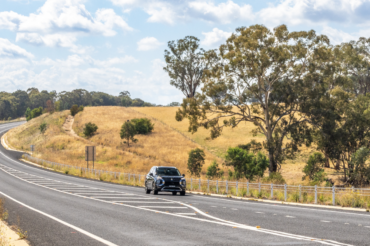
Fed and watered, we stop at the supermarket to stock up for the real purpose of this trip, which is driving the Central Arnhem Road to the remote community of Nhulunbuy in north-east Arnhem Land. This route, which leaves the Stuart Highway 50 kilometres south of Katherine, is not for the faint-hearted, as it’s 675km of mostly dirt road from the turnoff to the bauxite mining town of Nhulunbuy (formerly known as Gove) on the western edge of the Gulf of Carpentaria. The road traverses through cattle stations and Indigenous-owned land and travellers must obtain a permit from the Northern Land Council to use it. There’s only one designated place to break the trip, a little riverside oasis with a roadhouse, camping ground and donga accommodation called Mainoru Outstation Store, almost 200km from the highway.
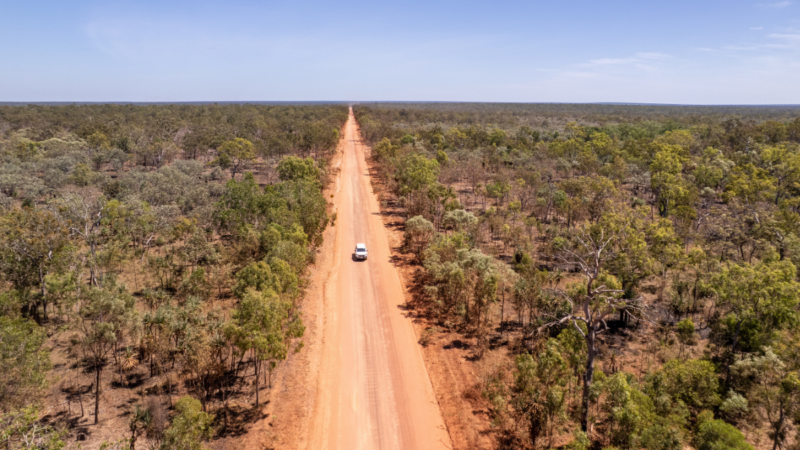
Apart from its remoteness, the Central Arnhem Road has a formidable reputation during the dry season for being dusty and rough, often corrugated and with patches of bulldust hiding in potholes that are not kind to vehicles. In The Wet, it’s infamously boggy and occasionally impassable due to washouts and flooding. The road is sufficiently notorious to warrant its own Facebook group, which keeps travellers updated on conditions as they change throughout the year. We were warned to take multiple spare tyres and watch out for livestock including cattle, buffalos and donkeys that appear seemingly out of nowhere. The side of the road is littered with vehicles that didn’t make the distance, so carrying adequate food and water in case you do break down is commonsense.
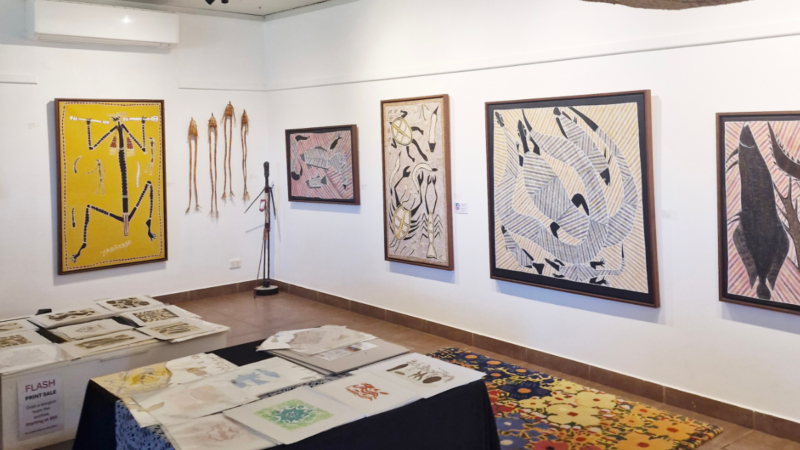
Having said that, Australian Country’s experience was mercifully uneventful and we managed to average a pretty constant 60kph for the journey, without ever needing to engage low ratio. The only misadventure was losing the CB radio aerial, which sheared off from its external mounting in a particularly corrugated section. Our first stop was in Wugularr/Beswick, about 60km from the highway, where traditional owner Esther Bulumbarra was waiting to show us round the Djilpin Arts Centre. The centre preserves the treasured Blanasi Collection, a showcase of significant artworks in the West Arnhem painting style curated by the late elder and didjeridu master David Blanasi. It’s also home to works by the late musician, actor and artist Tom E Lewis, who grew up in the region. There’s a retail gallery where visitors can purchase local art including prints, didjeridus, carvings, textiles and woven pandanus goods — you haven’t been to the Top End if you don’t come back with a pair of woven gunga earrings.
From there, we headed north through the community of Bulman with a stop at Jurassic Park Lookout for views across a floodplain to the Arnhem escarpment. The road continued to be relatively benign, a benefit perhaps of the extensive maintenance it had received in preparation for the Garma Festival, the Yothu Yindi Foundation’s annual celebration of Yolngu life and culture. Nonetheless, it was a welcome break to see the signs for Mainoru Outstation and break for the night. The roadhouse managers turn restaurateurs at night and offer a pub menu for dinner, which included a truly exceptional Mainoru Station steak.
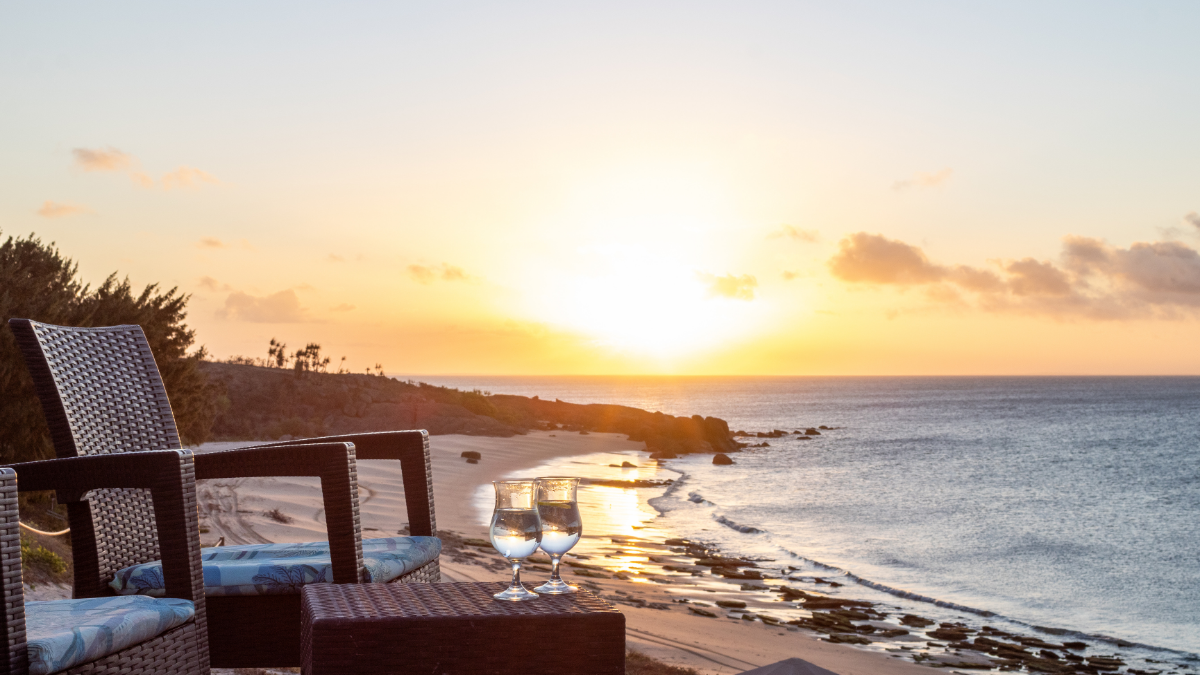
Making an early start in the morning, we completed the remaining 479km to Nhulunbuy by mid-afternoon, with time to check out the town’s beautiful, sparsely populated beaches and visit the Gove Boat Club for dinner and sunset over Melville Bay. As is the case with most of northern Australia’s coastline, it’s an exquisite form of torture to visit the sandy beaches and turquoise waters but not to be able to swim. As the signs warn, if the crocs don’t get you, the stingers will.
Fishing from a boat is a safer way to enjoy the ocean and there are any number of charter companies that will take visitors out to catch everything from Spanish mackerel and barramundi to red emperor. Landlubbers might opt to take the 5km walk around the Gayngaru Wetlands (Town Lagoon). The track winds through paperbark forests and twitchers may be rewarded with sightings of northern fantails, blue-faced honeyeaters, white-bellied cockatoo shrikes and brown falcons.
The Buku-Larrnggay Mulka Art Centre is at Yirrkala, about 18km south of Nhulunbuy. The history of this truly international art centre dates back to 1935 when the township was founded as a mission. Work from Yirrkala was among the earliest commercial Aboriginal art marketed by Methodist Overseas Mission.
There is strong evidence to suggest that the art emerging from Yirrkala in the mid-1950s was a catalyst in the non-Aboriginal art world’s realisation that Indigenous Australian art is a unique and profound independent art tradition — the equal of any other global form.
The artists of Yirrkala were among the first Indigenous Australians to recognise the potential use of visual art as a political tool and put this into practice with the now famous Yirrkala Church Panels (on display in the museum) and Yirrkala Bark Petition (on display at Parliament House in Canberra), dating from 1963, as well as the Wukidi Installation in The NT Supreme Court in Darwin. The Saltwater Collection of 80 bark paintings by 47 Yolngu artists now in the Australian National Maritime Museum played a major role in the High Court’s 2008 determination that the Yolngu were the owners of sea estates covering Aboriginal land.
When government policy shifted and self-determination came to communities in Arnhem Land, the artists saw the establishment of the community-controlled art centre as critically important to further their economic independence, cultural security over sacred designs and to maintain political and intellectual sovereignty. Yolngu culture is based on a strong sense of connection to land and sea and the Yolngu people traded and intermarried with Macassans from what is now the Indonesian island of Sulawesi for hundreds of years before European settlement. There are many artefacts and drawings in the museum recording these relationships and the centre is also the place to buy paintings, prints, carvings including yidaki (didgeridoos) and larrakitj (memorial poles) and woven goods.
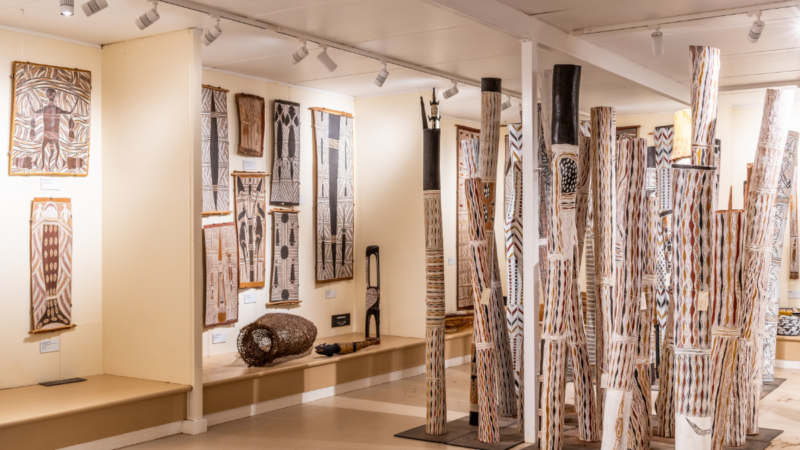
If you time your visit for late afternoon, take a detour on the way back to town to visit Bangambarrnga/Rainbow Cliff for sunset. For dinner, perhaps head to Latitude 12 in the Walkabout Lodge for a tropical menu with an Asian accent.
Banubanu Beach Resort at the top end of Dhambaliya/Bremer Island is a 40-minute speed boat trip from Gove Boat Club, an exhilarating ride to what turns out to be paradise. Irish-born Eileen O’Doherty, a former vet nurse, and her Italian-Australian partner, Fulvio Inserra, an IT manager, took over the resort, which is on the lands of the Rirratjingu clan — the traditional owners of the island — at the beginning of 2025. They have big plans for the property, which currently consists of six ensuited beachfront bungalows and a central bar and restaurant hub with a plunge pool for cooling dips. Their not-so-secret weapon is their French chef/front-of-house couple, who turn the freshest of seafood and tropical produce into the kind of fare you’d expect from a fine diner. Guests are welcome to explore the island and there are kayaks and stand-up paddleboards for water-based entertainment.
It’s a wrench to leave the island, but there are more cultural experiences beckoning on the mainland, including the opportunity to stay with the Burarrwanga family at their Bawaka Yolngu Experience for yet more insights into the planet’s oldest living culture. Depending on the season, you could find yourself weaving and dyeing pandanus leaves, crafting fishing spears from hardwood or walking with traditional owners to learn about bush foods and traditional medicines. Then there’s the fishing, which is exceptional, and a tour to Ngalarrkpuy (Lonely Beach), which includes a visit to Bungugunglu, a very large, thousands-of-years-old Yolngu fish trap site. To describe it as bucket-list is an understatement, in a trip that is literally packed with privilege. AC