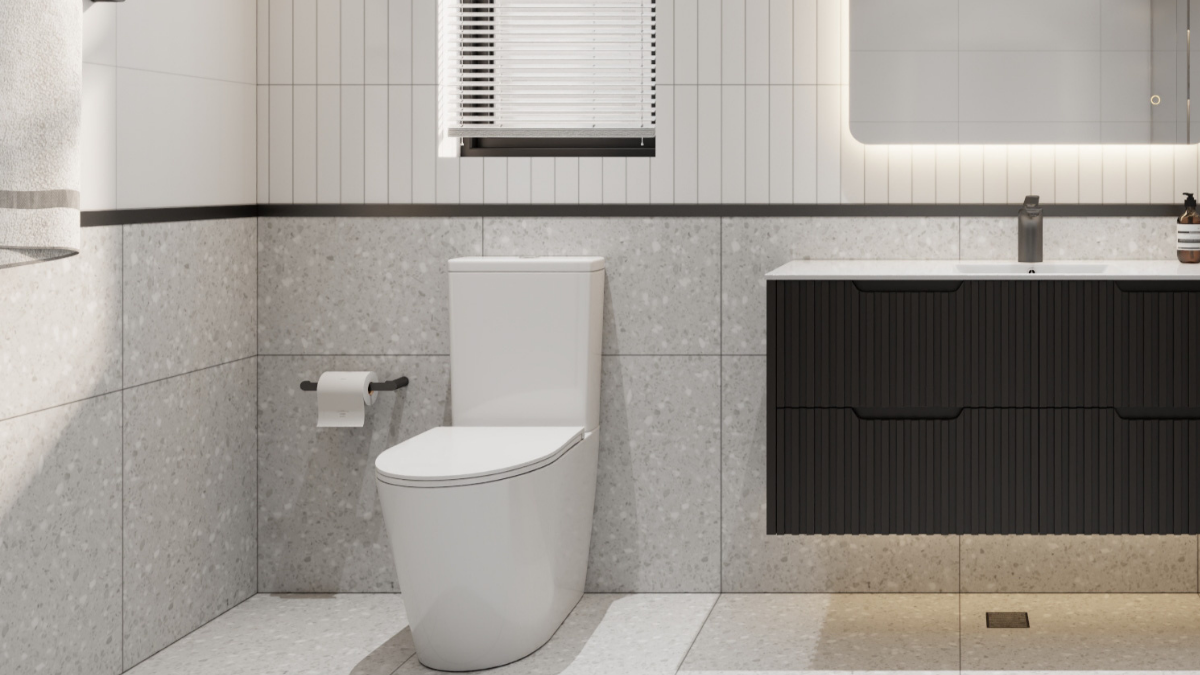
When embarking on a bathroom renovation or building a new home, most people focus on the aesthetic profile of the toilet, the soft-close seat, or the water-saving buttons. However, the most critical decision actually lies behind the ceramic pan: the trap configuration. In the Australian plumbing landscape, understanding the difference between a P-Trap vs S-Trap is the difference between a seamless installation and a costly plumbing disaster. The “trap” is the bend in the pipe that holds a small amount of water, creating a seal that prevents sewer gases from entering your home. Identifying whether your waste outlet goes through the floor or the wall is the first step in ensuring your new fixture is compatible with your home’s existing infrastructure.
The Functional Role of the Toilet Trap
Every toilet in Australia must have a trap to maintain a hygienic environment. This integral part of the plumbing system uses water to block foul odours and bacteria from the sewage system from rising back up into the bathroom. While all traps perform this same vital function, the direction in which the waste pipe exits the toilet dictates the type of trap required. Choosing the wrong configuration can lead to significant structural issues, as relocating a waste pipe through a concrete slab or a structural wall is an expensive and time-consuming process. By identifying your trap type early, you can narrow down your search to fixtures that offer a perfect fit for your specific bathroom layout.
Understanding the S-Trap Toilet
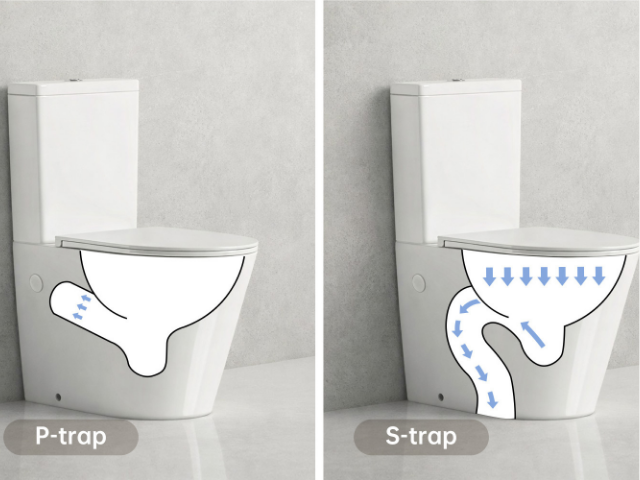
The S-trap is one of the most common configurations found in older Australian suburban homes and ground-floor installations. As the name suggests, the waste pipe exits the back of the toilet and curves downwards, forming an ‘S’ shape that connects directly into the floor.
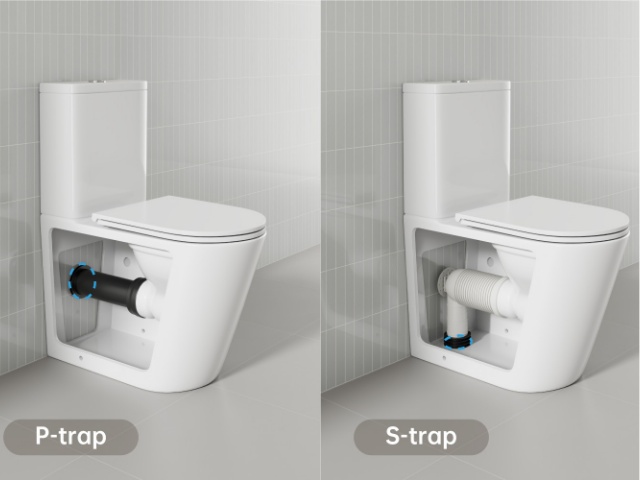
- Floor Connection: The defining characteristic of the S-trap is that the waste outlet connects to the plumbing through the floorboards or the concrete slab.
- Commonality: This style was the standard for many decades in Australia. If you are renovating an older home, you will almost certainly find an S-trap in the existing bathroom.
- Measurement Matters: When replacing an S-trap, the most important measurement is the “set-out”—the distance from the finished wall to the centre of the waste pipe in the floor.
While S-traps were the historical standard, they are still widely used today, particularly in houses where the plumbing is easily accessible beneath the floor.
The Mechanics of the P-Trap Toilet
The P-trap has become increasingly popular in modern Australian apartment living and multi-storey builds. In this configuration, the waste pipe exits the back of the toilet horizontally and connects directly into the wall. When viewed from the side, the pipe resembles the letter ‘P’.
- Wall Connection: The waste pipe exits through the wall behind the toilet rather than the floor. This is ideal for second-storey bathrooms or apartments where pipes are hidden within wall cavities.
- Aesthetic Versatility: P-trap toilets often allow for a more streamlined look, as the plumbing is hidden behind the wall rather than being visible on the floor.
- Maintenance Access: Because the connection is horizontal, P-trap toilets can sometimes be easier to service if the plumbing is accessible via an external wall or a service duct.
If your current toilet has a pipe that disappears into the wall behind the pan, you will need to search specifically for a P-trap model to avoid extensive wall and pipe modifications.
P-Trap vs S-Trap: Key Differences at a Glance
To help you identify which system you currently have and which replacement you need, consider the following technical comparison:
| Feature | S-Trap Toilet | P-Trap Toilet |
| Waste Outlet Location | Through the floor | Through the wall |
| Common Application | Ground floors / Older homes | Apartments / Modern builds |
| Critical Measurement | Wall to centre of floor pipe | Floor to centre of wall pipe |
| Visual Profile | Pipe exits downwards | Pipe exits horizontally |
How to Identify Your Existing Trap Type
Before you visit a bath supply store, you can easily identify your trap type with a quick visual inspection. Simply look behind the toilet pan to see where the thick waste pipe goes.
- Look Down: If the pipe goes straight into the floor, you have an S-trap.
- Look Back: If the pipe goes straight into the wall behind the toilet, you have a P-trap.
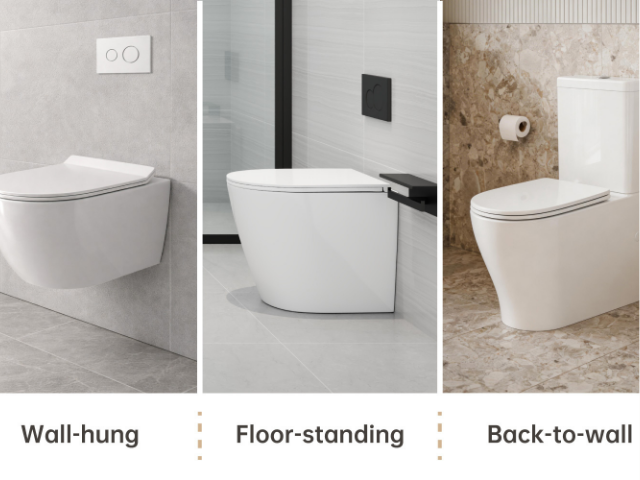
- The Skirted Trap: Many modern “back-to-wall” toilets have a ceramic skirt that hides the trap. In these cases, you may need to check the plumbing from the side or refer to the original floor plans of the house.
Identifying the trap type correctly ensures that you can purchase your new toilet with absolute confidence, knowing that the installation will be straightforward for your plumber.
Why MyHomeware is Your Trusted Bath Supply Store
MyHomeware is a leading Australian supplier of quality bathroom fixtures, dedicated to providing practical solutions that simplify the renovation process. We understand that navigating the technicalities of P-Trap vs S-Trap plumbing can be daunting for many homeowners. That is why our curated collections are designed to offer maximum compatibility with Australian plumbing standards.
Our range includes a wide variety of modern designs that cater to both wall and floor outlets. Whether you are looking for a sleek, space-saving P-trap toilet for a modern apartment or a robust S-trap for a traditional family home, MyHomeware provides the expertise and the products to ensure your upgrade is a success. We support our customers from initial research through to the final product selection, ensuring that technical issues like trap compatibility never stand in the way of a stunning bathroom design.
The Versatility of Universal Trap Toilets
One of the most significant advancements in toilet design is the “Universal Trap.” Many modern toilets sold at MyHomeware feature a universal connection that can be converted to either an S-trap or a P-trap using a specialised plastic connector (often called a vario-bend).
- Reduced Installation Risk: Universal toilets take the guesswork out of the selection process. If you aren’t 100% sure about your set-out, a universal model offers the flexibility your plumber needs to make it work.
- Modern Aesthetics: These toilets are almost always back-to-wall designs, meaning the trap is completely hidden within the ceramic, providing a clean and contemporary look.
- Ease of Cleaning: Because the trap and pipes are enclosed, there are no awkward gaps or pipes to dust, making these the premier choice for low-maintenance bathrooms.
Practical Tips for a Smooth Toilet Installation
To ensure your renovation goes as planned, keep these professional tips in mind:
- Consult Your Plumber Early: Before buying a fixture, have a plumber confirm your trap type and measure your “set-out” (for S-traps) or “height to centre” (for P-traps).
- Check the Water Inlet: In addition to the trap, check where your water enters the toilet. Is it a bottom inlet (near the floor) or a back inlet (hidden behind the cistern)?
- Don’t Move the Pipe Unless Necessary: Moving a waste outlet is one of the most expensive parts of a bathroom renovation. Choosing a toilet that fits the existing plumbing will save you thousands of dollars.
- Choose Rimless for Hygiene: Regardless of the trap type, consider a rimless toilet for superior hygiene and easier cleaning.
Upgrade Your Bathroom with Absolute Confidence
Understanding the technical requirements of your plumbing is the secret to a stress-free bathroom renovation. By correctly identifying whether you need a P-trap or an S-trap toilet, you ensure a perfect fit, a faster installation, and a more hygienic home environment.
Ready to find the perfect toilet for your Australian home? Explore our comprehensive range at MyHomeware.