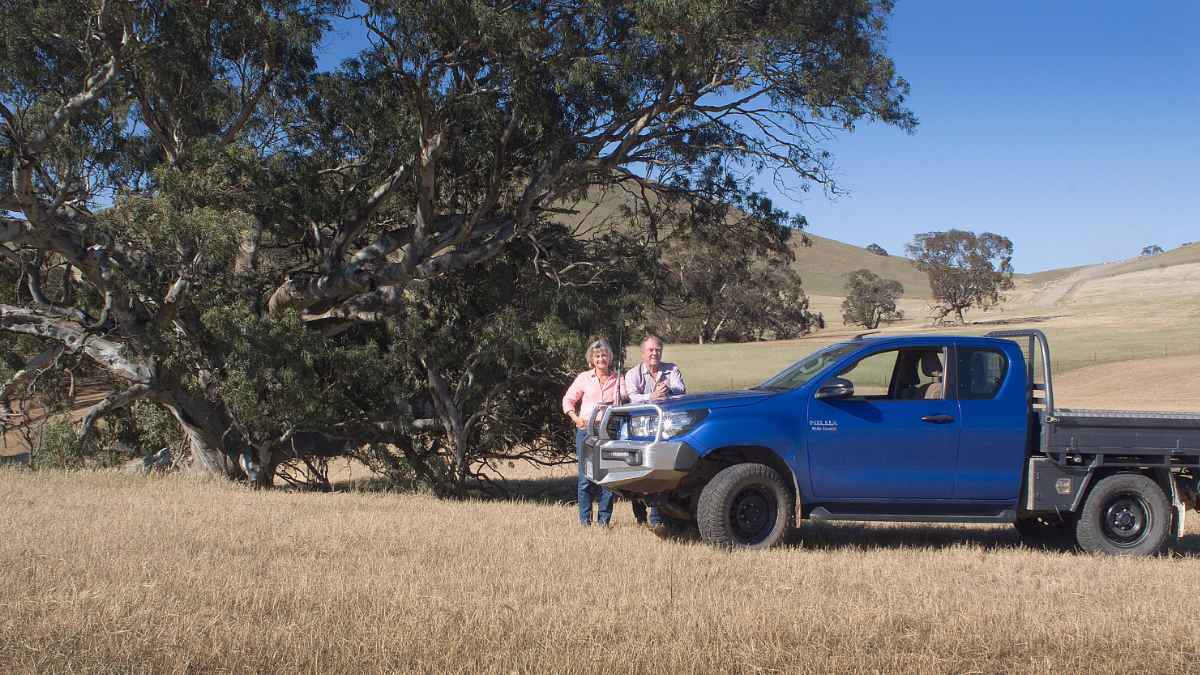
DAVID AND JO GEBHARDT HAVE DEEP ROOTS IN THE BURRA DISTRICT OF SOUTH AUSTRALIA’S MID-NORTH.
As David Gebhardt tells his story, his surname is a familiar one in the Burra district of South Australia’s Mid-North. His links to the region began six generations ago, when Gustav Gebhardt, a German butcher, came to South Australia and set up a shop in the then burgeoning copper mining town of Burra.
“Back then, Burra was very prosperous with a population of 5000 and plenty of commerce including 22 pubs,” David says. “Gustav did well from his butchery and ended up buying land around town. There used to be four branches of our family with farms in the district, but now there’s only our place, The Gap, and my brother Bill’s farm, Mount Cone.”
Pastoralists moved to the Mid-North from the 1840s, but it was a shepherd’s discovery of significant copper in Burra Burra Creek in 1845 that really put Burra on the map. By 1851, the Burra mine, nicknamed the “monster mine”, employed more than 1000 miners and 378 more men in the smelter. The discovery of gold in the eastern states in 1853 was a blow to the town as miners deserted for the Victorian fields.
By 1860, rising costs and the falling price of copper caused more of the mostly Cornish miners to move on the copper mines on the Yorke Peninsula. The mine continued, albeit at reduced scale and as an open cut, until it was finally closed in 1877. Although some of the buildings were demolished to provide housing materials, these days the remnant sites of the heyday make Burra a popular stopover for visitors enroute to the Flinders Ranges to the north.
The flooded blue lake of the open cut is one photogenic stop on a tour of the town. The restored Morphett’s pumping engine house is another site on a self-guided tour of the town, which includes tunnels and cellars from an old brewery, dugouts in the creek where the miners used to live, the Bon Accord Mine Museum and the Redruth Gaol, a one-time women’s penitentiary.
In fact, David met his wife, Jo, in 1985 when they were both on the committee for the Jail Breakers B&S (bachelors & spinsters) ball, which took its name from the penitentiary. They both grew up in the district — David on Mount Cone and Jo on Barton Hill, 15 kilometres south of Burra at Black Springs, where her family ran a Merino stud.
When David and Jo married in 1990, they moved to The Gap, which David’s family had bought in 1982. Jo had studied ag science after school and was always involved with the running of her family’s stud. She brought the Barton Hill stud to the 3000-hectare farm with the move. She ran the stud very successfully for 20 years until it became clear that their sons, Charles and Angus, who both have careers in finance, would not be returning to farming.
“We sent our boys away to boarding school to get a good education and they’re using it,” David says. “All that matters is that your kids are happy, so there was no point insisting they stay on farm.”
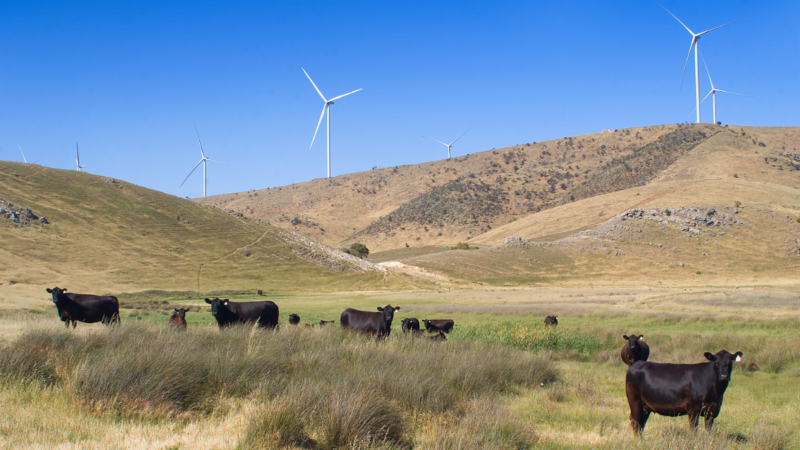
These days, The Gap runs a mix of Angus cattle and Aussie Whites, a self-shedding meat sheep variety that’s easier to manage than sheep that need to be shorn. They also lease some farming land to a neighbour and host wind turbines on some of their rougher, more inaccessible country. “Farming has become more difficult, so diversification is important,” Jo says.
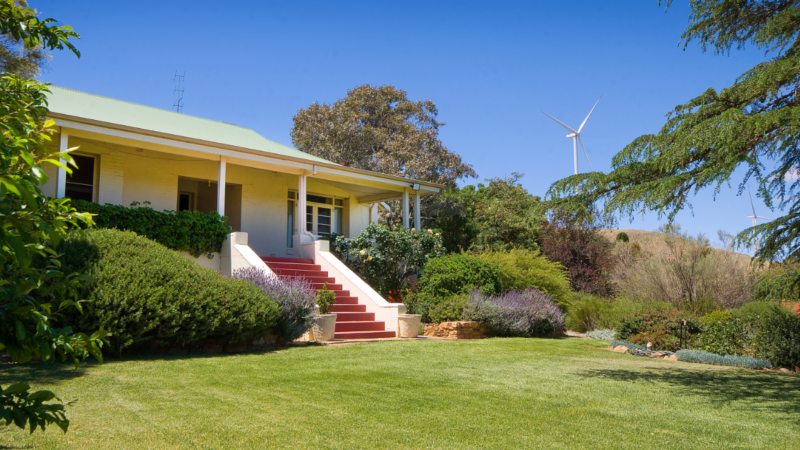
The homestead the Gebhardts live in has been added to through the years. “The original stone and pug [clay, sand and straw or hair] dwelling was built 140 years ago,” David says. “In the 1920s, Andrew and Gwendoline Tennant did a significant alteration when they added the front section. We have their plans hanging in the entrance hallway of the homestead.”
The Tennants are another significant name in the Burra pastoral community as Andrew’s brother, John, bought the landmark Princess Royal station in 1900 and it remained in the family until 2000. The Gap homestead had another update in the 1970s when yet another of Burra’s farming stalwarts, the Warnes family, bought the property.
David and Jo had their renovation pretty much forced upon them when the property was at the epicentre of an earthquake that registered 5.1 on the Richter scale. “It sounded like a jet taking off,” David recalls. “The ceilings wobbled like trampolines, paintings fell off the walls, which also developed significant cracks, things fell off the mantelpieces and both underground and internal water piping was damaged.”
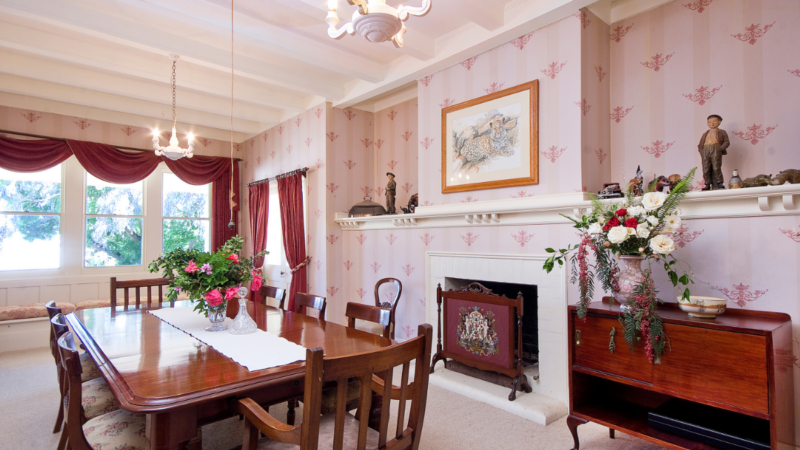
Jo adds that they were able to retain many original features along with the repairs. “We kept the original stainless-steel sink and benchtop and extended it to match in the kitchen. Along with the structural work, we also pulled up carpets to showcase the beautiful jarrah floorboards underneath.”
She says that closing the Merino stud gave her more time to devote to the garden, which is a beautiful showcase of mostly native plantings, including succulents in a nod to the often searing summer temperatures.
“In Mrs Tennant’s day, she would have had a full-time gardener and there were roses and hedges everywhere,” she says. “We’ve scaled all that back, though we still have some prolific roses. We also have a few fruit trees and for a few years we opened the grounds as part of the Open Gardens scheme.”
The Gebhardts add that although a shadow of its former self with about 1000 residents, Burra continues to punch above its weight, with more amenities than many country towns.
“It’s a good community,” David says. “We’ve had lots to do with the local footy and tennis clubs and Jo is the treasurer of the golf club.”
“Thanks to tourism, we’ve got lots of good shops,” Jo adds. “There are still four pubs as well as nice cafes and gift and clothing shops. We enjoy being part of the community and it’s a great place to live.” AC