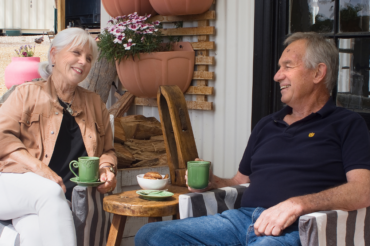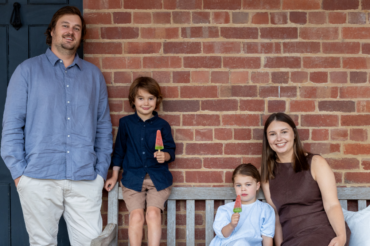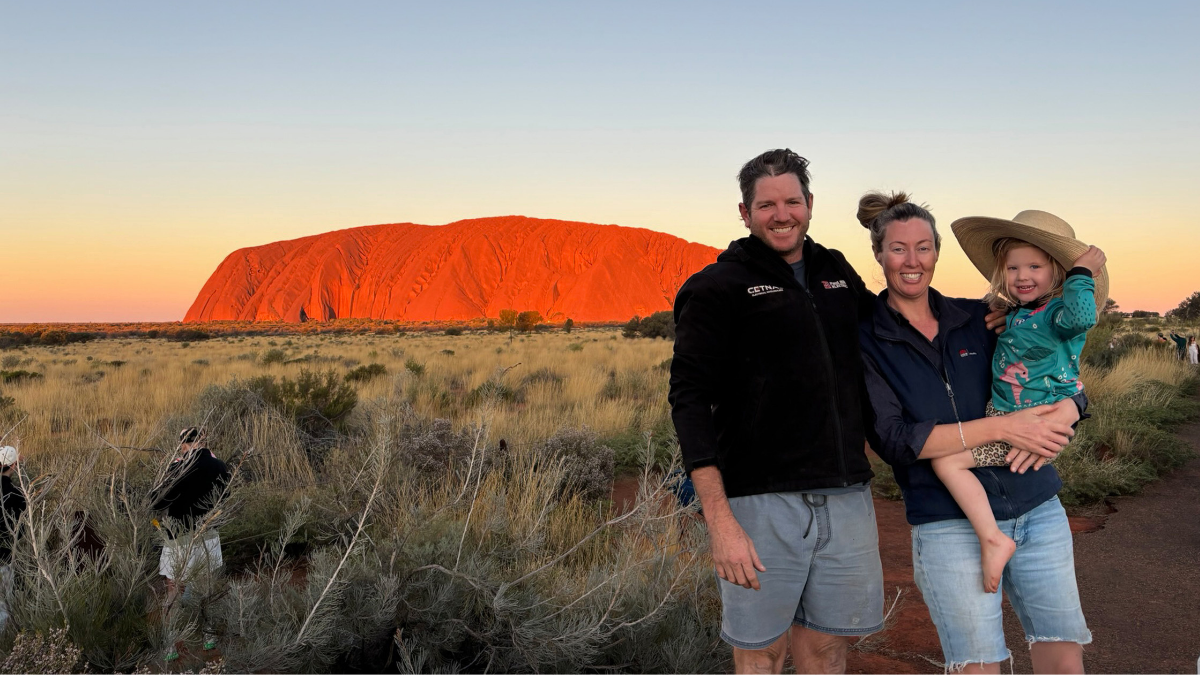
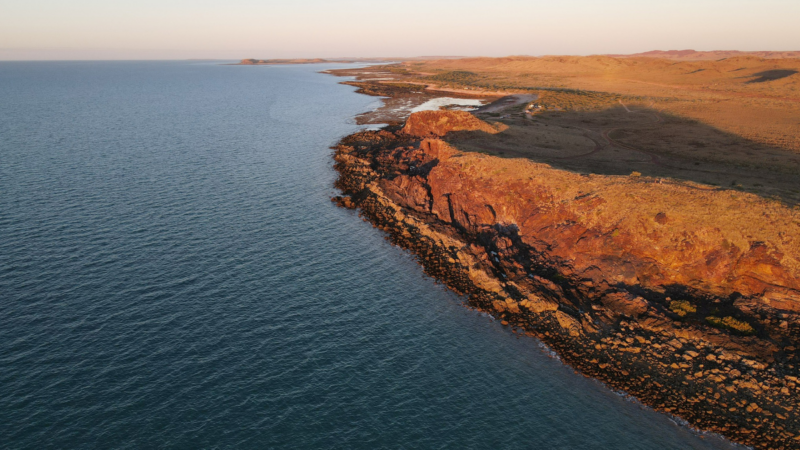
it’s barely midday in the Western Australian Coral Coast town of Kalbarri, but Annabelle and Paul Riley are ready for a nap. They’ve been up since 4.30am and on the water since daybreak, cruising on a lobster pot pull tour along the cliff-lined coast. They’ve been out with a licenced fisherman, checking pots, pulling in dozens of rock lobsters, throwing many back to the ocean and feasting on the catch of the day. Plus, they brought four more rock lobsters back to the 21-foot Wonderland Hornet van they’ve called home since January last year (eds: 2025). So that’s dinner sorted for the next couple of nights.
The Rileys are living the dream with their three-yearold daughter, Georgie, and 13-year-old cattle dog Ellie. They’ve joined a growing band of young Australian families who are enjoying an extended sabbatical from the workaday world and are travelling around the country, either doing the ‘big lap’ or spending extended periods in places they’ve always dreamt of visiting. Long-time readers of Australian Country may remember we first met Annabelle and Paul a decade ago when they were living in Paul’s hometown of Condobolin in the NSW Central West. Paul is an electrician and Annabelle, who also grew up in the region on a farm at Eugowra, is a nurse administrator and they’d restored a gorgeous century-plus home in the centre of town. They sold that property in 2015, moved to Noosa on Queensland’s Sunshine Coast and restored another home, which they sold last year.
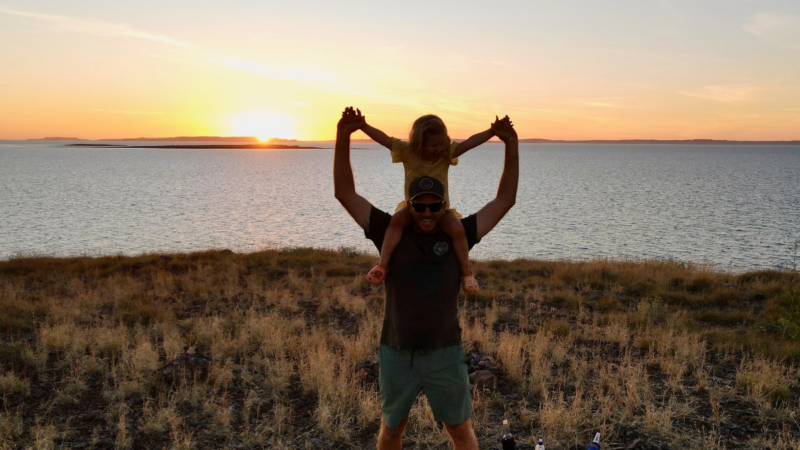
“We’d initially intended just to do it up and flip it,” Annabelle says. “But we kind of fell in love with it and got married in the yard. It wasn’t until Georgie was born in 2022 that we realised we actually wanted to be closer to our family – somewhere we could easily visit from for a weekend. We sold the house and decided to hit the road and hopefully find somewhere where we’d really like to put down roots.”
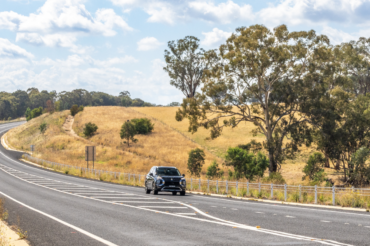
Although that will inevitably be in NSW, the Rileys decided to take the long road home with a 4WD and an off-road van to travel for as long as they can afford and desire, or until Georgie starts school at the beginning of 2028. They eased into van life, visiting friends at Byron Bay for an extended holiday and then catching up with family and more friends as they parked up on a friend’s farm near Forbes for another month. Then they headed west along the Murray River to Mildura and to the Clare Valley before tracking north to Uluru, Kings Canyon, Alice Springs and Katherine. Next extended stop was in Darwin, where Annabelle’s brother is based with his job in the ADF, before heading across to the Kimberley, down the WA coast to Exmouth, Ningaloo and now Kalbarri. At press time they planned to continue down the coast to Perth, then ‘duck’ home across the Nullarbor for Christmas before heading back through Victoria and South Australia to explore the south-west of WA during 2026.
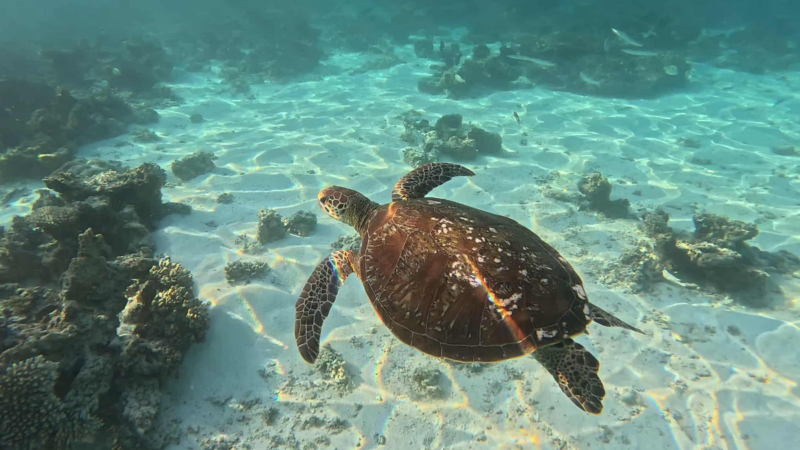
“It’s just amazing to wake up each morning and realise you’re not on the hamster wheel and don’t have to face the daily grind of work,” Annabelle says. “When you take a career intermission, it’s an opportunity to work out what you really want to do, which at this stage, is make our investment money work for us rather than us work for money. That’s assuming interest rates work in our favour and, of course, we don’t look like missing the boat on the property market.”
Unlike many travellers, the Rileys don’t stick to the rule of threes – no more than 300km or three hours driving in a day, always stay for three nights and arrive at your next destination by three in the afternoon. “Apart from school holidays, we don’t book ahead,” Annabelle says. “That means if we like a place, we can stay longer and if we don’t, we can move on.”
She cautions that life on the road is not as cheap as some might imagine. Fuel is expensive – in remote parts it can cost $450 to fill up their RAM. Campsites vary in price anywhere from $20 to $50-plus a night. The Rileys balance this out by free-camping when they can and count some beach campsites, albeit with a weather eye out for crocs, as some of their favourite spots.
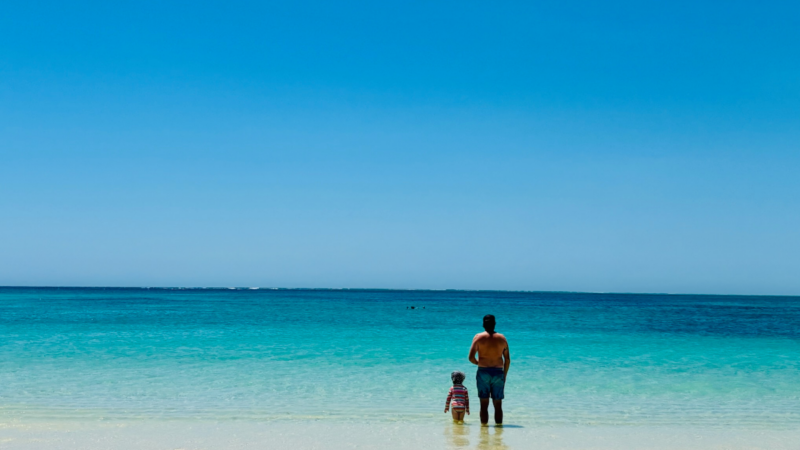
“Our van is well set up with solar panels and, provided the sun is shining, we can exist very comfortably offgrid,” Annabelle says. “We’ve been grateful we have air conditioning and a diesel heater for when it gets cool. Starlink is also a game changer as it means we can keep in touch with everyone. We have an induction cooktop, an air fryer and a barbecue and, thanks to Paul’s cooking, we eat very well. We’re not big on eating out, but we do enjoy sourcing local produce. Some of the station stays sell their own beef. Pardoo station sold incredible Wagyu and Bullara station’s meat was pretty good too.”
Along with unforgettable scenic natural wonders, Annabelle lists spending concentrated time with Georgie and being able to watch her grow in confidence and sociability with all the new encounters as some of the many positives. Forging new friendships is another. “We’ve met some amazing people on the road,” she says. “If we’re heading in the same direction, we keep running into each other. I’m sure some will become lifelong friends. We keep in touch with each other’s travels via an app called Polarsteps.”
Annabelle is hard pressed to think of negatives with their adventure. “I miss having a dishwasher,” she admits, when pressed. “And access to a regular hairdresser. Because we’ve downsized, we seem to go through clothes more frequently. That’s when Vinnies becomes your best friend. But then I’ve always loved a thrift shop and I can’t help having a look around for things for when I do have a house again.”
Although they’re not sure when that will be, the Rileys say they plan to include Tasmania in their travels and have a “good look around regional NSW” before they set up camp for good. “We’ve got another trip to Darwin for a family event mid-next year and in April we’re going to Texas in the US for the wedding of my exchange family’s host brother. For people who have nothing to do, it seems like we have quite a bit going on” AC