PHOTOGRAPHER TAMARA DEAN CELEBRATES AND ADVOCATES FOR THE NATURAL WORLD VIA HER ETHEREAL ENVIRONMENTAL PORTRAITS.
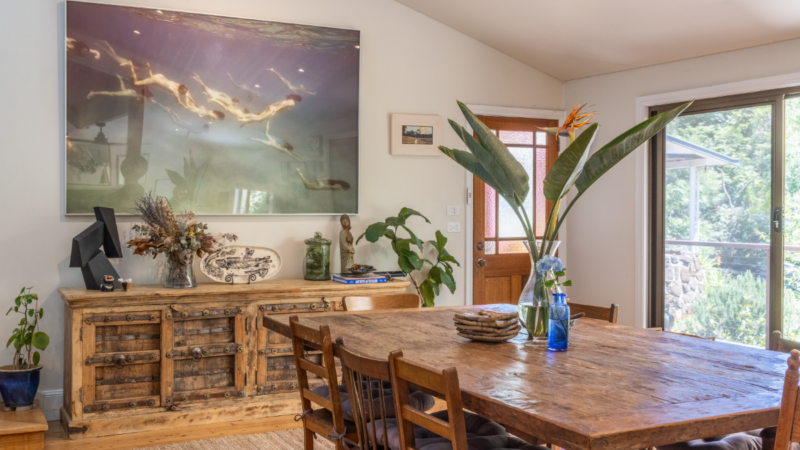
At first glance, Tamara Dean’s artwork looks like a school of fish moving in concert through sparkling water. Closer inspection reveals that the “fish” are in fact humans, swimming naked in a perfectly choreographed split-second.
Tamara has built a formidable reputation for her nature based photography, whether it’s captured on land, in the ocean or from the swimming pool studio she installed at her home on the NSW South Coast. A conservationist for as long as she can remember, she’s developed her oeuvre around the vulnerability of the environment and humans’ interaction with it.
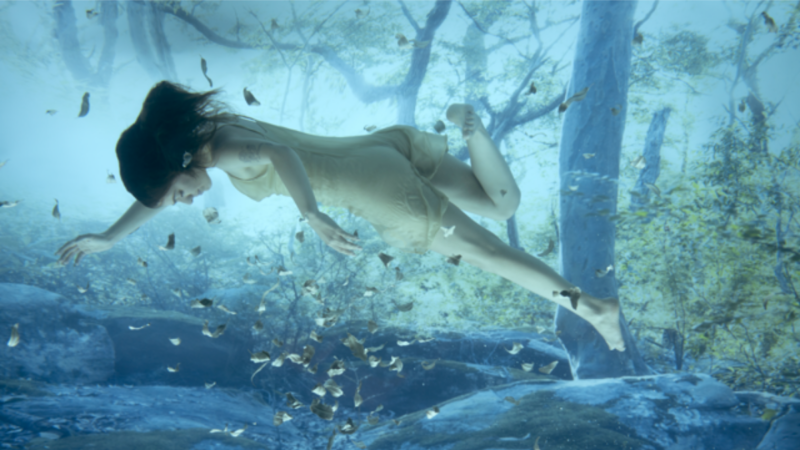
“I’d been considering a body of work called Endangered for a while when I was invited to attend a Climate Council conference on Heron Island,” Tamara says. “There were opportunities during the weekend to go out on a boat and I took my underwater housing on board. Towards the end of the trip, I asked if anyone might be interested in being in the shot I had in mind, provided they were OK with being naked. I got a few takers and we had about seven or eight attempts at getting them to swim in the same direction together, with the strongest swimmer leading and diving deepest. It wasn’t until I got back on the boat and looked at the shots that I realised it had worked. So, I put out the word for a repeat attempt on the last day. About 16 people turned up at dawn and they swam off the jetty to a point where there was sufficient clarity. And that’s when we really nailed it. There are actors, environmentalists and business leaders in that shot, though you probably wouldn’t know who they were unless you were there.”
A subsequent attempt closer to home on Jervis Bay saw Tamara set out with her camera equipment, snorkel and pool noodle to give her stability, with 21 female “volunteer models” on two boats. This time, conditions were not so benign and the crew had to contend with rough water, sea sicknesses and grey nurse sharks swimming below. Nonetheless, she was happy with the results and her other-worldly captures added to the growing portfolio. Somewhat ironically, Tamara confesses she’s not a confident swimmer and working underwater is more of a “means to an end” result for her photography.
Tamara’s joint passions for photography and the environment were well established by the time she was in high school. “As a teenager, I was that kid always writing letters to council about environmental issues,” she says. “About the same time, a family friend gave me a camera and I started studying photography at Hornsby TAFE. I’ve spent a lot of years protesting about forest destruction and I’ve always felt the imperative to use my art to keep the conversation happening.”
As a school leaver, Tamara studied fine arts briefly, then moved to the new design course at Western Sydney University in Werrington, where she was encouraged to try various forms of expression, from animation and graphic design to photography and illustration. “I was working various jobs in the creative fi eld when I went to a protest and noticed press photographers covering the event,” she recalls. “I admired the way they worked. At that stage, I hadn’t developed a lot of technical skills, so I applied to The Sydney Morning Herald for work experience.”
That led to a job, which turned into a decade’s experience as a press photographer, covering the full news list of events, with Tamara gradually developing a specialty in environmental portraiture. Then children, Ruby, who is now 20, and Jack, 18, came along, and Tamara came to the realisation that it wasn’t a job for someone with a young family. So, she refocused on her art practice and gained gallery representation.
The career-defining opportunity came from a random meeting at an exhibition opening, which led to a six-week residency at sculpture and architecture park Art Omi in upstate New York in the USA. “My partner [production manager from music festivals and events Jonnie Leahy] and I were new in our relationship, but he and my family made it possible for me to go,” Tamara says. “I’d always thought it was good to specialise, but during the residency my mind was opened to working in different mediums. This has only been enhanced by a number of residencies I’ve been lucky enough to have done at Hill End in the NSW central west. These days, I’m much more open to whatever opportunities present.”
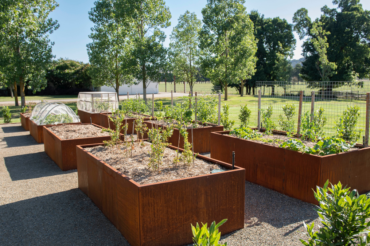
A decade ago, Tamara, Jonnie and the children embraced their collective love of the natural world when they moved to the Shoalhaven hinterland, buying a house on what Jonnie describes as “six acres of lantana”. In the intervening years, they’ve devoted countless hours to transforming the overgrown property into a forest retreat. “We went to a nursery in the Southern Highlands with a map, a rough outline of what we wanted to achieve,” Tamara says. “They advised mainly native plantings with fast-growing wattles on the outside for wind breaks for the longer-term gum trees. When we first moved here, we used to experience intense winds, but now we don’t feel them at all. I’m glad we did it while we had the energy and it feels as though we’ve built a series of garden rooms and a haven that attracts birds, wombats, kangaroos and even bilbies.”
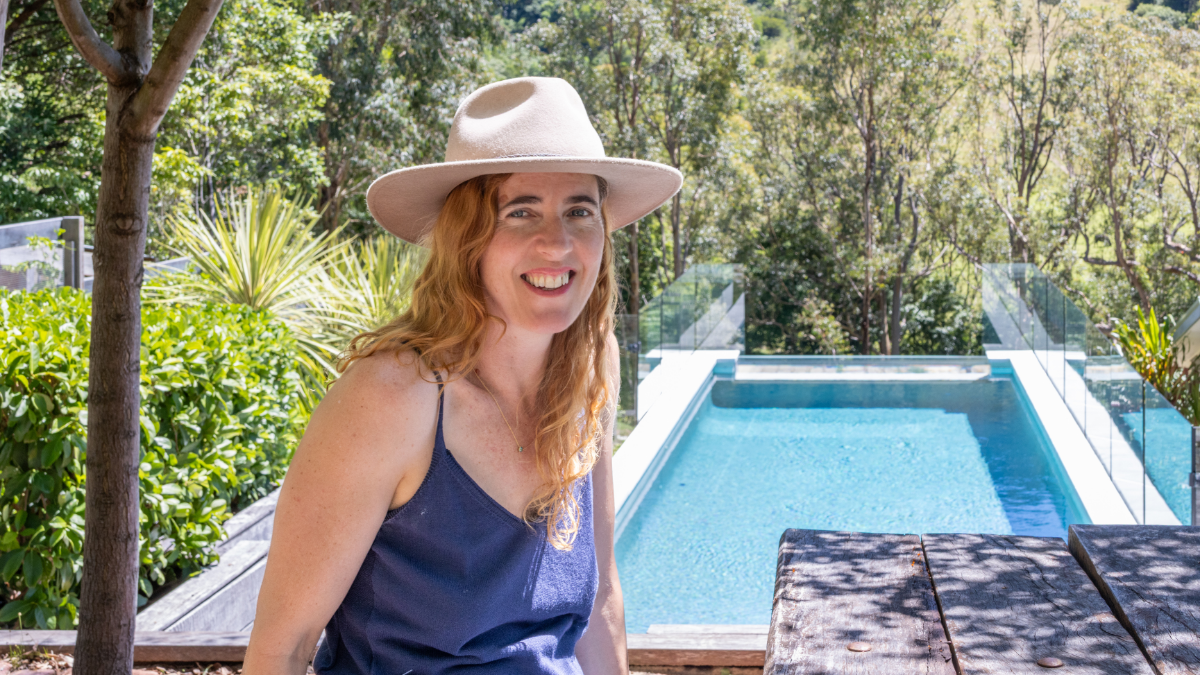
Given Tamara’s pursuit of underwater photography, they also took a big leap and installed an “underwater studio”, which looks pretty much like a regular backyard swimming pool except that one wall is entirely glass. It also reduces the occasions when she has to actually get in the water to achieve her shots.
“After much research, we approached freshwater pool specialists Naked Pools for the build,” Tamara says. “There are many advantages to a freshwater system and high on that list is that the water is said to contain less chlorine than regular tap water. The vastly reduced chemical inputs not only make the pool cheaper to maintain, but also easier for my subjects as they won’t suffer from skin and eye irritation issues. It can also be heated to 40°C and I keep it at around 30-31°C when I’m shooting, so my models can feel comfortable in there for hours.”
Tamara says that while the pool may have reduced the amount of time she spends underwater, she still has to get in to set up props and do the heavy work of installing and weighting down backdrops. For this, among many other reasons, she adds that she is excited to be taking her work on fresh tangents, looking to different environments in the natural world for her milieu.
“I think I’ve reached a stage where I need new challenges,” Tamara says. “I’m craving city vices, like restaurants and being closer to arts venues. Even though we have great galleries down here, there aren’t as many opportunities as in the city and I feel I need the stimulation. The kids will stay down here, so it’s not as though we won’t be visiting, but Jonnie and I will be moving back to Sydney when this property sells.”
Daunting as the prospect of reinventing her practice may sound, Tamara says not being sure of what’s ahead is exciting. “I like discovery and that’s the energy I need to keep moving forward,” she adds. “I’m lucky to be represented by Michael Reid Gallery. He’s not afraid to take risks and allow me to expand as an artist, so I feel confident taking this next step. I’m proud of what we’ve achieved professionally and with the garden down here, but Jonnie already works much of the week in the city, so the time is right. I can’t wait to see where the next chapter lands us.” AC